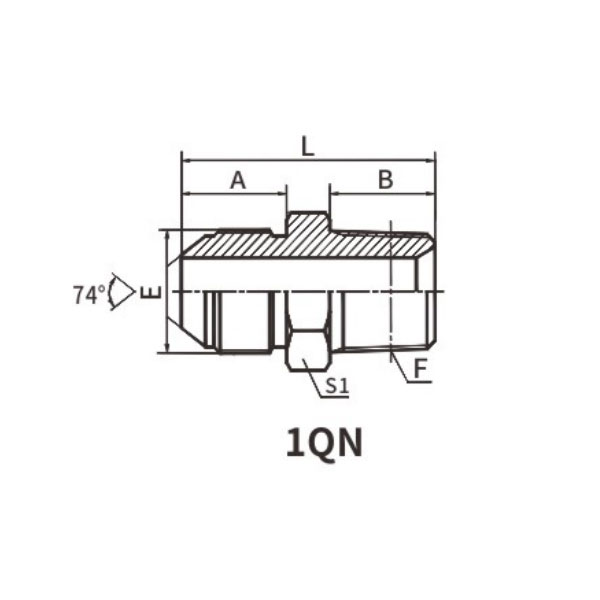
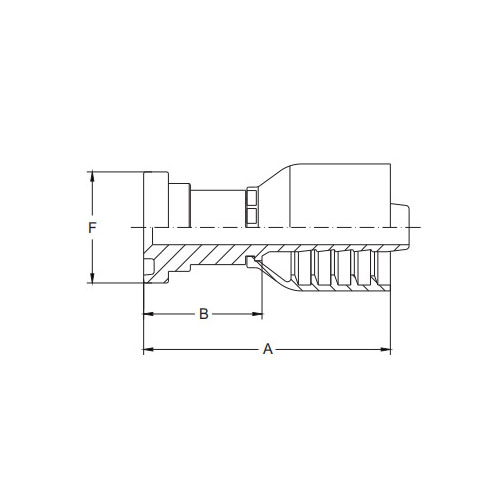
Hydraulic systems are increasingly used in mobile machinery, industrial automation, agricultural equipment, material handling systems, construction machinery, and specialized manufacturing equipment. As hydraulic circuits become more compact and functional, connection technology has become an important part of overall system performance. Reliable fluid connections help maintain pressure stability, reduce fluid leakage, simplify maintenance, and support efficient equipment operation.
Among the connection solutions used in fluid power applications, Hydraulic Quick Coupling technology provides a practical way to connect and disconnect hydraulic lines without requiring extensive assembly work. Its value is particularly apparent in equipment that requires frequent attachment changes, modular hydraulic circuits, or regular maintenance. By simplifying hose and component connections, quick coupling systems can contribute to shorter service procedures and more flexible equipment configurations.
The development of hydraulic connection technology is also being influenced by higher expectations for safety, durability, cleanliness, and operating efficiency. Manufacturers are therefore paying closer attention to coupling design, sealing performance, material selection, flow characteristics, and compatibility with different hydraulic media.
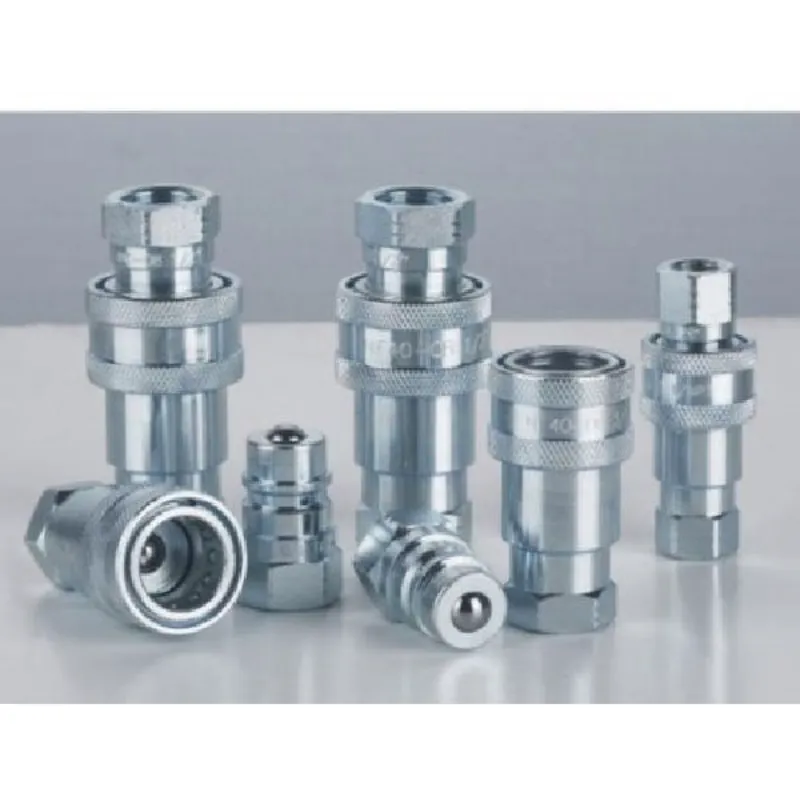
A hydraulic circuit depends on consistent fluid transmission between pumps, valves, cylinders, motors, hoses, and other components. Every connection represents a potential source of pressure loss or leakage if it is not properly designed or installed. A well-engineered quick connection can help create a reliable interface between hydraulic components while allowing convenient system maintenance.
This is especially useful for equipment that operates in demanding environments. Agricultural machines may require attachment changes between different implements, while construction equipment can use interchangeable hydraulic tools. Industrial machinery may also benefit from modular hydraulic assemblies that can be serviced without extensive disassembly.
Hydraulic coupling performance is influenced by more than the external shape of the connection. Internal fluid passages, sealing elements, locking mechanisms, surface treatment, and material properties all affect how the coupling performs during operation. A suitable design needs to balance connection convenience with pressure resistance, mechanical strength, and sealing reliability.
For engineering applications, flow efficiency is another important consideration. A connection that creates unnecessary restriction may increase pressure loss and reduce hydraulic system efficiency. Optimized internal passages can support smoother fluid movement while maintaining the structural strength required for the intended operating environment.
Sealing technology is central to hydraulic connection reliability. Hydraulic fluid operates under pressure, and even a small sealing problem can lead to fluid loss, contamination, environmental concerns, or reduced system efficiency. Properly selected sealing materials need to remain compatible with the hydraulic medium while maintaining elasticity under changing temperature and pressure conditions.
Sealing performance also depends on manufacturing precision. Surface finish, dimensional consistency, component alignment, and assembly quality can influence the effectiveness of the sealing interface. For this reason, professional manufacturing processes and appropriate quality control are essential when producing hydraulic connection components.
| Design Factor | Importance in Hydraulic Applications |
|---|---|
| Sealing System | Helps minimize fluid leakage and maintain connection integrity |
| Internal Flow Path | Supports efficient fluid transmission with controlled restriction |
| Locking Mechanism | Maintains a secure connection during equipment operation |
| Material Selection | Supports mechanical strength and environmental resistance |
| Surface Treatment | Improves resistance to corrosion and surface wear |
Material selection has a direct relationship with the service life of hydraulic connection components. Different operating environments can expose couplings to moisture, dust, vibration, mechanical impact, temperature changes, and corrosive substances. Materials therefore need to be selected according to pressure requirements, environmental conditions, fluid compatibility, and expected service conditions.
Metallic materials are widely used for hydraulic connection components because they can provide the mechanical strength needed for pressurized fluid systems. Depending on the application, manufacturers may select different grades of steel, stainless steel, or other engineering materials. Surface treatment can further improve resistance to corrosion and wear, particularly in outdoor or industrial environments.
Hydraulic components require controlled dimensions and consistent machining quality. Small variations in critical interfaces can affect sealing, locking, flow behavior, and connection stability. Precision machining is therefore an important part of coupling production.
Modern manufacturing processes can support tighter dimensional control and improved repeatability. Inspection procedures can evaluate critical dimensions, surface conditions, pressure resistance, sealing behavior, and functional operation. Consistent manufacturing quality helps reduce variation between components and supports more predictable performance after installation.
Quick hydraulic connections are used across a broad range of equipment because they provide flexibility when hydraulic lines need to be connected or disconnected. Their application is not limited to one machinery category. Instead, the appropriate coupling configuration depends on the hydraulic circuit, operating conditions, connection frequency, pressure requirements, and equipment structure.
In construction machinery, detachable hydraulic tools can require practical connection solutions that support efficient attachment changes. Excavation equipment, lifting machinery, and other mobile systems can benefit from connection components designed for demanding working conditions.
Agricultural equipment represents another important application area. Tractors and agricultural implements frequently use hydraulic circuits for lifting, steering, positioning, and other functions. Flexible connection systems can make equipment configuration and maintenance more convenient while supporting the practical requirements of field operations.
Industrial equipment can also incorporate quick connection systems into hydraulic test benches, production machinery, material handling systems, and automated equipment. In these applications, repeatable connection performance and ease of maintenance can contribute to improved equipment availability.
Mobile machinery often operates with interchangeable hydraulic attachments. Operators may need to change hydraulic tools according to different working conditions, making connection convenience an important consideration. A properly designed quick coupling can reduce the effort required to connect auxiliary hydraulic circuits while helping maintain a secure fluid connection.
For mobile applications, mechanical durability is particularly important because equipment can experience vibration, shock loading, dust, moisture, and changing environmental conditions. Coupling systems intended for these environments need appropriate structural strength and protection against external contamination.
Industrial hydraulic systems generally emphasize repeatability, controlled operation, and maintenance efficiency. Hydraulic connections may be integrated into production equipment, hydraulic power units, automated machinery, and specialized testing systems. In such environments, coupling selection needs to consider system pressure, flow demand, installation space, fluid characteristics, and maintenance procedures.
Modular hydraulic architecture is becoming increasingly common as manufacturers seek more flexible equipment configurations. Connection components that support modular assembly can make it easier to replace individual sections of a circuit or integrate additional hydraulic functions.
As hydraulic systems become more powerful and complex, connection safety is receiving greater attention. Hydraulic fluid under pressure can create serious hazards if a connection becomes loose, damaged, or incorrectly assembled. A suitable coupling system should therefore be used according to its intended operating conditions and installed following the manufacturer's technical requirements.
Maintenance practices are equally important. Couplings should be inspected for visible damage, contamination, seal deterioration, corrosion, and abnormal wear. Before disconnecting a hydraulic line, system pressure should be released according to established maintenance procedures. Keeping connection interfaces clean can also help prevent particles from entering the hydraulic circuit.
Contamination can affect hydraulic system performance by damaging valves, pumps, seals, and other precision components. Connection interfaces should therefore be protected when they are not in use. Protective caps or plugs can help limit exposure to dust and other contaminants during storage or equipment maintenance.
Clean assembly practices are particularly important when hydraulic systems contain sensitive components. Even when a coupling itself performs reliably, contamination introduced during connection or disconnection can affect the wider hydraulic circuit. This makes cleanliness an important consideration throughout installation and servicing.
Hydraulic connection requirements vary significantly between applications. A coupling suitable for one machine may not be appropriate for another because pressure, flow, temperature, fluid type, connection frequency, and environmental exposure can differ. Product selection should therefore begin with the technical requirements of the complete hydraulic system rather than focusing only on connection size.
Engineers generally need to evaluate the required flow capacity, operating pressure, connection configuration, sealing material, mounting arrangement, and environmental conditions. The physical space available around the connection is also important, particularly in compact hydraulic assemblies where access may be restricted.
Connection frequency can influence the preferred design as well. Equipment that is frequently reconfigured may place greater emphasis on easy handling and connection reliability, while permanently installed hydraulic circuits may prioritize long-term sealing stability and compact integration.
A well-designed hydraulic connection needs to balance several factors rather than maximizing one characteristic in isolation. High mechanical strength is valuable, but it must work together with reliable sealing and suitable flow characteristics. Compact dimensions can save installation space, but the design still needs to provide adequate access for maintenance.
This application-oriented approach is encouraging manufacturers to provide broader product configurations and more specialized engineering support. Customization may involve connection geometry, sealing materials, surface treatment, port configuration, or other characteristics required by a particular hydraulic system.
The hydraulic industry is increasingly connected with automation, electrification, remote monitoring, and intelligent machine control. Although these developments are changing how equipment is controlled, hydraulic circuits remain essential for applications requiring high force density and reliable mechanical actuation.
As hydraulic systems become integrated with electronic monitoring and intelligent control platforms, supporting components also need to provide stable and predictable performance. Reliable connections contribute to the integrity of the fluid circuit and can support consistent operation of digitally controlled hydraulic equipment.
Future connection technologies are expected to place greater emphasis on compact structures, improved sealing, corrosion resistance, easier maintenance, and compatibility with increasingly sophisticated hydraulic architectures. Manufacturers that combine material engineering with precision manufacturing will be better positioned to respond to these changing requirements.
Modular design is likely to remain an important direction for hydraulic equipment. Manufacturers are seeking ways to simplify installation, servicing, and equipment reconfiguration. Flexible connection technologies can support this approach by allowing hydraulic circuits to be assembled from functional modules rather than treated as a permanently fixed structure.
This development is particularly relevant to machinery manufacturers serving multiple application sectors. A modular hydraulic platform can potentially accommodate different attachments, operating functions, and machine configurations while maintaining a consistent basic architecture.
The future development of hydraulic connection products will depend on continued improvements in engineering design, manufacturing precision, sealing technology, and application-specific solutions. Industry participants need to consider not only the initial connection process but also the complete service life of the component.
Long-term reliability depends on material quality, manufacturing consistency, appropriate sealing systems, correct installation, and suitable maintenance. A connection component should work as part of the entire hydraulic circuit rather than being evaluated as an isolated mechanical part.
At the same time, increasing equipment complexity is creating demand for technical cooperation between hydraulic component manufacturers and machinery developers. Application knowledge can help manufacturers refine product structures and provide connection solutions that better match real operating conditions.
The development of reliable hydraulic components requires more than basic machining capability. It involves material engineering, fluid power knowledge, sealing technology, manufacturing control, testing, and an understanding of how components behave within complete hydraulic systems.
For manufacturers, continuous research and process improvement can help address changing requirements across construction, agriculture, industrial automation, transportation, and specialized equipment. Strong technical capabilities also make it easier to develop application-specific solutions rather than relying solely on standardized configurations.
For companies evaluating hydraulic connection technologies, the most effective approach is to consider the complete operating environment, including hydraulic medium, pressure, flow, temperature, mechanical loading, connection frequency, installation conditions, and maintenance requirements. A technically appropriate solution can help support system reliability while improving service efficiency.
Changzhou Lianfeng Bioengineering Co., Ltd. is a modern food enterprise specializing in the research, development, production, sales, and application of non-dairy creamer products. The company operates under a strict management system and emphasizes technical research, product development, service quality, and long-term cooperation.
Its product development capabilities include personalized fat powder, foaming fat powder, and formulations designed to provide rich foam, stable performance, good solubility, and a creamy and smooth sensory profile. The company also develops powdered solutions based on functional oils and edible oils to address different food application requirements.
It is important to distinguish these capabilities from hydraulic component manufacturing: Changzhou Lianfeng Bioengineering Co., Ltd. is focused on food ingredients rather than hydraulic connection products. Its emphasis on research, formulation development, production management, and customized solutions reflects the company's role within the food ingredient sector.
With a development philosophy centered on mutual benefit and long-term cooperation, Changzhou Lianfeng Bioengineering Co., Ltd. continues to strengthen its technical capabilities and service approach while developing customized food ingredient solutions for changing market requirements.